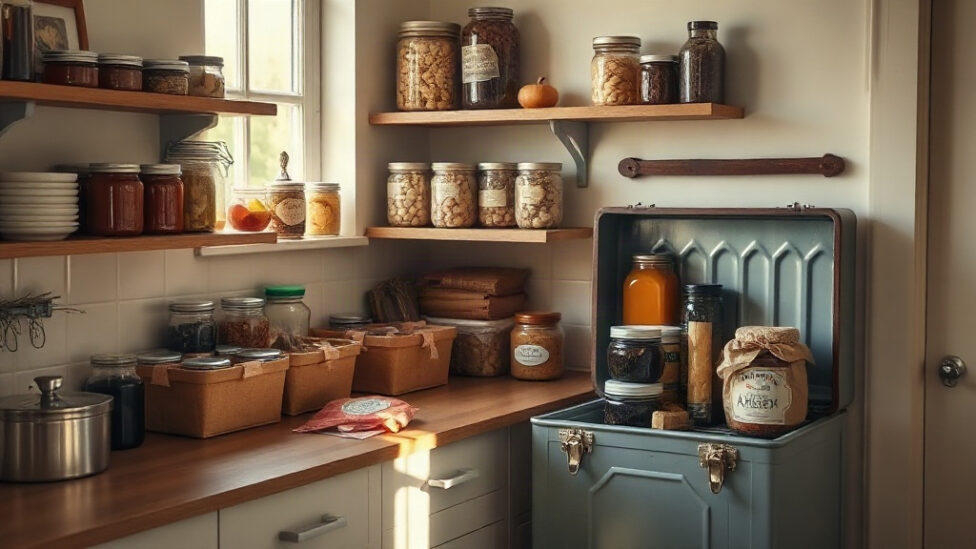
Shane, who gave only his first name, has been prepping for more than 20 years in his terraced home on a quiet street in the Forest of Dean. Behind his front door there are hundreds of jars, bottles and packets, stacked in cupboards, drawers and any other space he can find. He says he has enough food to last 12 months, with what he grows in the garden and his own power and water supply to help.
Why he started
He began preparing to cope with power cuts and blocked roads, which can cut off rural parts of the Forest during severe weather. In recent years he has noticed more people asking him for advice, often because of extreme weather, cyber attacks on food supply chains and international tensions. He says a lot of people are frightened, and it is a good time to get ready.
How the supplies are kept
He keeps shop-bought food such as honey and custard in a metal chest in the living room. The metal is there to keep mice out. Filing cabinets hold jars of his own preserves, and dehydrated goods such as chillies sit in other storage. Stoves, solar lights and batteries are kept behind doors and under sofas.
For washing if the mains water fails, he has a gravity shower. A wood-burner can heat a kettle of water when the power is off. His tins and jars include meals he has made for himself, such as leek and potato soup and chicken rogan josh.
Rotating the stock
Shane checks the dates and rotates his stock. When he uses something, he replaces it, so the amount he has stays about the same. He says chutneys keep for two or three years, while pickles, meat and fish last about a year. He does not store dairy, which he says would curdle. He also suggests choosing food you will actually enjoy, rather than only plain basics.
Government advice and local calls
The government has asked households to keep at least three days of food, water and medicine, along with a torch, a battery or wind-up radio and some cash. The Cabinet Office has said its national resilience campaign will run over the next three years. Chloe Turner, Stroud District Council leader and a Gloucestershire county councillor, has asked for a local plan on food and energy so that residents can be supported in a crisis.
Practical information
The official Be Ready checklist sets out what to keep at home for an emergency, including water at three litres per person per day. You can read it here: https://beready.campaign.gov.uk/wp-content/uploads/sites/252/2026/10/Be-Ready-Checklist_English.pdf . It is the government’s own guide and does not mean a national emergency is expected.