President Donald Trump has confirmed that a specific threat to RAF Fairford in Gloucestershire prompted the withdrawal of all US bombers from the Cotswolds airbase, marking a significant new development in the counter-terrorism investigation centred on the county.
What Trump Said
Speaking to reporters at the White House on Monday as he departed for Nebraska, Trump confirmed the bombers had not been moved routinely. Asked whether a specific threat had prompted the withdrawal, he replied: “Yeah I think we can say that. They didn’t fly out by accident. There were some threats. And rather than tempting the enemy, we’ll capture the enemy and beat the enemy. But why should we leave them there?”
Trump added that Washington “actually knows the people that made the threat”, though he stopped short of naming them. His comments appear to confirm earlier US media reports that fresh threat intelligence — separate from the 27 September incident at the Gloucestershire base — directly drove the decision to remove the aircraft.
Vice President JD Vance echoed Trump’s tone, saying the bombers had been moved out of an “abundance of caution” and suggesting Iran had been engaging in acts of terrorism “for 49 years”. Secretary of State Marco Rubio took a more cautious line, saying it was “not unusual” for military assets to be redeployed and declining to directly link last week’s incident to the withdrawal.
The RAF Fairford Incident
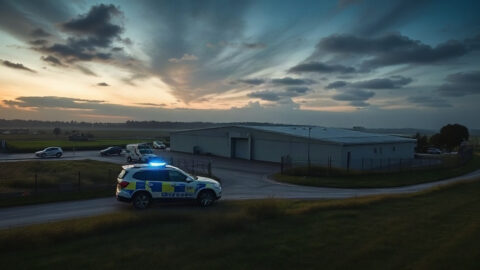
The sequence began on 27 September, when police were alerted to three suspicious vehicles near the perimeter of RAF Fairford, near the village of Whelford in the South Cotswolds. Five men were initially arrested on suspicion of terror offences and released on bail. A sixth man — a UK-Iranian national — was subsequently arrested and also released on bail pending further investigation by counter-terrorism detectives.
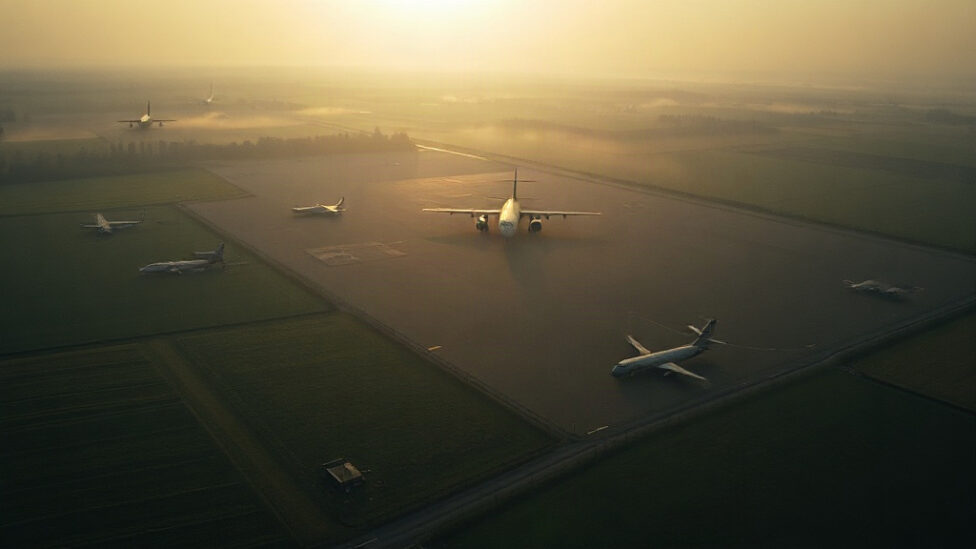
The Pentagon confirmed on Sunday that approximately a dozen B-1 Lancer heavy bombers had been removed from the base and returned to their home stations in America. Downing Street insisted on Monday that RAF Fairford remained safe, pointing to Trump’s own earlier praise of the UK’s “police, defence and security services” in relation to the Fairford response.
Prime Minister Andy Burnham said last week there were “strong indications” that Iran had played a role in the incident — a claim Tehran has strongly denied. Iran had previously stated in July that “any base used for aggression against Iranian territory constitutes a legitimate target”.
Strategic Significance for Gloucestershire
RAF Fairford has served as a forward operating location for the United States Air Force for decades, making it one of the most strategically significant military installations in Britain. In recent months, the US had been flying B-1 and B-52 bombers from the base for Middle East operations, following UK government approval for their use in defensive strikes on Iran.
Defence analyst Christoph Bergs of the Royal United Services Institute told Reuters that the redeployment would “reduce America’s capacity to quickly surge sorties against Iran, reducing the threat level somewhat”. He noted the planes could potentially be repositioned to Diego Garcia or Gulf bases, subject to capacity, allied negotiations and security assessments.
For communities near the airbase in South Gloucestershire, the departure of the bombers has brought relative quiet after months of intensive flight activity — though the counter-terrorism investigation means the area remains under close national scrutiny.
What Happens Next
Six individuals remain on bail as counter-terrorism detectives continue their inquiry. The exact nature of the threat Trump referenced has not been publicly confirmed; Washington sources speculated to the BBC it may relate to sabotage attempts or potential strikes on the aircraft — drawing comparisons to Ukraine’s Operation Spiderweb, a covert drone attack on five Russian bases in June 2025.
This is a developing story. The Cheltenham Times will continue to follow the investigation and any further government statements.